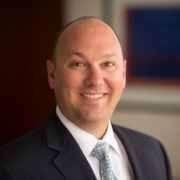
McCarthy Cook SVP Brian Harnetiaux to Become BOMA Chair for 2016-17

June 7, 2016
Published in: California Buildings News

Q Congratulations on being the next chairman of the Building Owners and Managers Association (BOMA) International. It’s good to have a Californian at the helm. As many of our readers are BOMA members or member prospects, can you give us an idea of your agenda?

A BOMA International takes a holistic approach to supporting the industry, which means we work in many different areas. Whether it’s advocating commercial real estate’s interests before Congress or creating critical educational resources on cutting-edge topics, we’re constantly innovating to best support a strong industry. There may be those in the industry who aren’t aware of the full breadth of the work we do, and I want to showcase everything BOMA has to offer. During my tenure, I especially want to highlight BOMA’s education and research. People frequently ask me what BOMA’s “take” is on a specific topic or issue. Our advocacy team is always ahead of the curve on legislative issues from drones to e-cigarettes, and we have great thought leadership in a wide variety of other areas. For example, we recently released a white paper on workplace transformation and tenant occupancy density. Densification is an important concern in our industry right now as tenants lease less space per employee, and we want to support our members as they navigate this new reality. The white paper was released alongside a resource for property professionals called the “Tenant Leasing Checklist: A Guide for Assessing Tenant Occupancy Density,” which helps building owners and managers address the effects of this trend on the built environment. Property managers are seeing their roles become increasingly diversified—they now have to be experts on everything from accounting to information technology to customer relations. That means BOMA has to work hard to provide our members with all the information and training they need to do their jobs well. Luckily, you see that reflected in our educational and research offerings. We also have a number of excellent tools for those working within the fast-growing industrial sector, such as the Industrial Experience Exchange Report, a one-of-a-kind resource that provides benchmarking data for industrial properties. This is a very exciting time to be in commercial real estate, and BOMA International is going to continue to be fundamental to our success as an industry.

Q How can the commercial real estate management industry become more effective at recruiting and training managerial talent?

A I am very passionate about this topic. Commercial property management is a wonderful career field: It’s rewarding, it’s interesting and it offers competitive salaries. The only problem is, not enough people know about it! When I was in college, I thought a property manager was just the person who stopped by to change the light bulbs, and most people in this job will tell you they found it by chance. However, our field is perfect for young professionals, many of whom can be very successful at an early age in this industry. Someone can start out as a receptionist and work their way up to asset manager or even real estate owner. Commercial real estate offers endless opportunities for advancement. Our industry places enormous importance on on-the-job training. We tend to promote from within, and that’s a great way to build up future leadership. Where that falls short, BOMA fills in the gaps with education, training, mentorship opportunities and networking. At our annual conference, we host Career Day, which is an opportunity for college students and veterans transitioning out of military service to experience first-hand how rewarding commercial real estate can be. We also have an Emerging Professionals in CRE Program for those new to the industry. If we can make more people aware of the opportunities our industry offers, I think there will be no end to the amazing talent entering commercial real estate.

Q What are the biggest legislative challenges ahead for the commercial real estate industry nationally? In California? And are there ways BOMA can better meet these challenges?

A We saw some huge legislative victories this past winter, including the permanent extension of the 15-year depreciation on qualified leasehold improvements and a two-year extension of the energy efficiency tax deduction for commercial buildings. We’re focusing on a number of other issues, including supporting the continuation of carried interest and “like-kind” exchanges, which are vital to the health of our industry. In California, the biggest issue we’re facing is “split roll” property tax. In California, Proposition 13 limits the increase in property taxes annually, but certain legislators have been trying to rescind that and apply to residential only. This would mean commercial properties would be assessed either annually or every couple of years, which would have a very negative effect on our industry. BOMA California and BOMA local associations across the state have been working hard to educate our legislators about what this would mean for our industry. I truly believe our lawmakers want to do what’s best for the state economy, and they simply don’t know what the real-world effects of this would be. Our job is to give them the information they need to make an informed decision. BOMA can best meet these challenges the way it has always—by educating our legislators about the needs of our industry. That strategy has been working very well for us, as evidenced by our recent legislative victories and our strong advocacy presence both on Capitol Hill and in the states.

Q Many BOMA members serve the industry as product and service vendors. How can BOMA be more meaningful to them? Attract more of them to BOMA?

A BOMA has a very robust product and service membership. Commercial real estate is built on trust and relationships, and having trusted, reliable product or service vendor partners makes a property manager’s job much easier. When vendors get involved in BOMA, they are showing building owners and property managers that they are invested in the industry and in their local communities. Seeing someone regularly at BOMA local association events helps build relationships that make the industry stronger.

Q Are there trends you see in California’s CRE management that you plan to highlight on the national stage?

A Because we have so much usable outdoor space, California is on the forefront of the new “live-work-play” trend. We’re seeing this significantly change the way office buildings are designed and managed, and property managers have to diversify their skill set to learn more about retail, for example. There are many small changes that take place when you manage a multiuse space—everything from how common area maintenance charges are allocated to what your daily schedule looks like. I think this trend is going to spread across the country, even to places with much more variable weather. What this will look like in different cities is still being determined, but BOMA is already offering resources to help property professionals excel with these new spaces.

Q What new or notable BOMA programs would you like the industry to be more aware of?

A We’ve seen tremendous growth with our BOMA 360 Performance Program, which recognizes excellence in building operations and management. Unlike other certification programs, BOMA 360 looks at every aspect of the building—from security and sustainability to tenant relations and training. BOMA 360 designees reap a tangible return on investment through operational efficiencies, as well as higher rental rates and higher levels of tenant satisfaction and retention than similar buildings without the designation. The program also has a significant international presence— there are BOMA 360 buildings in Canada, China, Colombia and Japan—with more countries starting to promote this designation. This is an exciting program that offers a great return on investment, and I encourage everyone to consider participating.


SORRENTO MESA OFFICE CAMPUS SELLS FOR $33.5 MILLION

2014 – SAN DIEGO BUSINESS JOURNAL

Jan. 26, 2014
Published in: San Diego Business Journal
Author: Lou Hirsh

New York- based AllianceBernstein Holding LP and McCarthy Cook & Co. of Costa Mesa have acquired Canyon Plaza, a two-building office campus in Sorrento Mesa, for $33.5 million, according to CoStar Group and public data.

The seller of the campus, located at 9808 and 9868 Scranton Road, was Chicago-based Jones Lang LaSalle Income Property Trust Inc. The 213,000-square-foot campus was built in 1986 and expanded in 1993.

In its own statement, McCarthy Cook & Co. said the campus was 49 percent leased to CareFusion Corp. at the time of the sale. It was previously master-leased to Conexant Systems Inc.

Officials said plans are in the works for a redevelopment of common areas and lobbies, with the addition of amenities including a tenant lounge, café and fitness center. The San Diego brokerage office of Jones Lang LaSalle Inc., which represented the buyer and seller in the transaction, has been retained to handle leasing.

MCCARTHY COOK & CO AND RIALTO CAPITAL MANAGEMENT BUY SANTA CLARA OFFICE BUILDING

Oct. 17, 2014
Press Release: RENTV – A Commercial Real Estate News and Media Company

McCarthy Cook & Co recently acquired a 120k sf office building in Santa Clara, in a partnership with Rialto Capital Management LLC. The price was not disclosed.

Built in 1984, the two-story building in situated on 5.7 acres at 3535 Garrett Dr, west of Bowers Ave on the south side of the 101 Fwy. The building also includes a recently-constructed fitness center as well as a 3.7 per 1,000 rentable square feet parking ratio.

Steve Prehm of Colliers International represented the seller, Applied Materials, a global leader in providing innovative equipment, services and software to enable the manufacture of advanced semiconductor, flat panel display and solar photovoltaic products. McCarthy Cook and Rialto Capital represented themselves in the deal.

At close, Applied Materials will commence a short-term leaseback of approximately 11% of the building, providing the new owners with the opportunity to reposition 3535 Garrett into a premier, amenity-rich office project. The buyer’s plans include: the redevelopment of all common areas and lobbies; a substantial enhancement of the building’s exterior and window line; the creation of new project amenities such as a tenant lounge, indoor and outdoor collaboration spaces and a branded bicycle program. In addition interior tenant space will be converted to a Class A, market ready standard.

Commenting on the acquisition, Tom McCarthy, Co-President of McCarthy Cook, said, “3535 Garrett will provide tenants with an exciting opportunity to occupy a completely repositioned, office project located next door to leading technology tenants such as Ericsson, Akamai, Abbott Labs, and Lenovo and a short walk to over 125k sf of retail amenities. ”

He added that, “The project has an efficient, rectangular floor-plate, above-standard parking ratio, and a state-ofthe-art HVAC system that provides cost savings and flexibility for tenants. Once the renovation is completed, the project will offer four sides of floor-to-ceiling glass on both floors and an unmatched environment for tenants in Santa Clara.”

McCarthy Cook has hired Kelly Simcox of Studio G Architects and Jon Pershing of OPI Builders to assist with the repositioning. Leasing and marketing will be led locally by Gregory M. Davies and Steve Horton of Cassidy Turley under the leadership of McCarthy Cook.

Rialto Capital Management is a diversified real estate investment and management company that is wholly-owned by the Lennar Corporation. This acquisition marks McCarthy Cook’s first joint venture with Rialto Capital.

MCCARTHY COOK & CO. EXPANDS INTO SAN DIEGO WITH ACQUISITION OF 213,000-SQUARE-FOOT CANYON PLAZA 

2014 – CANYON PLAZA PRESS RELEASE

Jan. 8, 2014
MCCARTHY COOK & CO. EXPANDS INTO SAN DIEGO WITH ACQUISITION OF 213,000-SQUARE-FOOT CANYON PLAZA IN JOINT VENTURE WITH ALLIANCEBERNSTEIN U.S. REAL ESTATE PARTNERS, L.P.

2-building office campus is the partnership’s first investment in San Diego

COSTA MESA, CA (January 8, 2014) – McCarthy Cook & Co. (McCarthy Cook) announced today the acquisition of Canyon Plaza, a 2-building, 213,000 square-foot office campus located in the Sorrento Mesa submarket of San Diego, CA. The campus was acquired in a partnership with AllianceBernstein U.S. Real Estate Partners, L.P. (AllianceBernstein), a real estate investment fund sponsored by AllianceBernstein, L.P., a global investment management firm with $447 billion of assets under management.

Lynn LaChapelle and Bob Prendergast of Jones Lang LaSalle represented the seller, a real estate investment fund advised by LaSalle Investment Management, a real estate investment firm with $47 billion of assets under management. McCarthy Cook and AllianceBernstein represented themselves in the transaction.

Canyon Plaza is currently 49% leased to CareFusion Corporation (NYSE: CFN), a global health care company that develops market-leading technologies that help hospitals measurably improve patient care. The project was built in 1986 and expanded in 1993. It was previously master-leased to Conexant Systems.

The approximately 100,000 square feet of existing vacancy will provide the new owners with the opportunity to transform Canyon Plaza into one of the premier, Class A, amenity-rich office campuses in Sorrento Mesa. The business plan will include the redevelopment of common areas and lobbies and the creation of project amenities such as a tenant lounge, café and fitness center. The San Diego office of Gensler Architects will lead the design efforts of the common areas and amenities. Jones Lang LaSalle has been retained to market the project to both full campus and multi-tenant users.

“Canyon Plaza offers an exceptional location within the submarket of Sorrento Mesa, which has been bolstered by the continued growth of the technology and health care industries,” observed Tom McCarthy, Co-President of McCarthy Cook. “The project has great bones, flexible floor-plates, great common areas and unique connectivity between the buildings. Once the renovation is completed, the project will offer an unmatched campus environment for tenants in Sorrento.”

This transaction marks McCarthy Cook’s first joint venture with AllianceBernstein U.S. Real Estate Partners, L.P.

About McCarthy Cook & Co.

McCarthy Cook & Co. was formed in 1995 as a real estate investment and development company. Since 1995, McCarthy Cook & Co. has completed approximately $4.5 billion in transactions representing approximately 10 million square feet of commercial office and mixed-used projects. During the same period, the firm has developed or has under development approximately 1.6 million square feet of office, retail and residential projects. The professionals at MCC specialize in the investment, development and operation of commercial real estate properties in the western United States.

About Alliance Bernstein

AllianceBernstein U.S. Real Estate Partners, L.P. is a real estate investment fund sponsored by AllianceBernstein, L.P., a global investment management firm with $447 billion of assets under management.

5 reasons why the VA will move to Mission Bay — and why it probably won’t

SAN FRAN BUS. TIMES

May 22, 2013
Published in: San Francisco Business Times
Author: Ron Leuty (Reporter)

Mission Bay seems like such a simple move for the VA Medical Center and its productive research operations. But let’s face it: This is a government agency in a city where it’s tough to do much of anything construction-wise.

Nothing is easy.

As the VA in the coming weeks gets a closer look at a Bay Area Council Economics Institute study on where the medical center could move — and how it might get there from its current Lands End home — there are several reasons why it could end up on a chunk of the Salesforce property in Mission Bay. (We first reported in November 2010 about the VA’s interest in Mission Bay.) Yet, there are equally strong reasons why it could never end up across from UCSF.

1. A public-private partnership.

Ask UCSF — it’s a great idea, but it takes a whole lot of dancing with the bureaucrats. UCSF pulled off the complex feat for its $200 million, five-story, 237,000-square-foot Sandler Neurosciences Center, which opened a year ago on the university’s Mission Bay campus.

The University of California system controls the land under the building, but UCSF put together a nonprofit to lease the site and finance construction through state bonds. The group then subleased the site to a partnership between McCarthy Cook & Co. and Edgemoor Real Estate Services, which in turn is leasing the building to UCSF.

UCSF gets control of the building in 30 years.

The VA would add another layer of complexity to that sort of arrangement, as would Salesforce’s ownership of the site most mentioned as the VA’s Mission Bay home. Then again, Salesforce CEO Marc Benioff, his wife Lynne and UCSF have a cozy relationship — UCSF researchers even gave several presentations at last year’s Salesforce Dreamforce conference in San Francisco — and those relationships and UCSF’s experience could help the VA.

The VA could go elsewhere in Mission Bay as well, including UCSF property, according to my colleague J.K. Dineen.

2. Damn gub’mint.

If the wheels of justice move exceedingly slow, those of government agencies move like a tortoise covered in molasses. Going uphill. Getting the VA to move on a new building and a new kind of transaction structure may be difficult. On the other hand, the problem could be presented as a market-driven solution to get around federal budget cuts.

As J.K. notes in his story, the VA has just $1 billion for major and minor capital projects — that’s the entire budget for 153 medical centers across the United States — and the VA hospital and research center in Mission Bay carries a $500 million price tag.

3. The Pelosi problem.

Think the far right kvetched when UCSF won a good chunk of the National Institutes of Health’s economic stimulus grants. Forget that the research was real and credible, the research was needed and will end up helping Americans of all political ilks, but the fact that grants fell into Pelosi’s district sent Limbaugh-like heads spinning.

Fast forward to today, with a Congress that is more divided. Even if the VA finds a creative way around a Congressional outlay for the project — as a lease-back play may provide — politicos are equally adept at subtly undermining what they don’t want. Put the face of Pelosi and Sen. Dianne Feinstein on that as well and you have the makings of politics at its worse.

4. Bio Mission Bay or Tech Mission Bay?

Yes, Mission Bay can — and has — attracted tech companies. In the end, though, it’s not the tech scene: It’s too much like a college campus — and a chunk of it is, indeed, a college campus — or an office park. Retail is limited. There’s no … how do I say it? … vibe.

That’s OK for lab-centric biotech companies, hospital patients and hospital workers. Restaurants will continue to spring up in and around the neighborhood, thanks to the growing number of housing units and the UCSF Medical Center’s under-construction $1.5 billion women’s, children’s and cancer hospitals. But those restaurants — dare I call them cafés? — will be more functional than hip, now and wow.

Where tech and bio are more likely to eventually compete for space is further south along Third Street, around the Dogpatch neighborhood. More on that soon.

5. It makes too much sense.

OK, that’s the cynic in me that’s talking.

Several UCSF researchers have a dual appointment at the San Francisco VA, helping the site land the reputation as one of the most industrious in the nation. Its work on Alzheimer’s disease, post-traumatic stress disorder, HIV and other conditions is nothing short of amazing.

Its $83 million budget last year led all VA centers.

Right now, those researchers travel to the VA site — literally on the edge of the North American continent in a heavily residential area that’s not well served by public transportation — from UCSF’s Parnassus or Mission Bay campuses.

It makes sense for those researchers to be as close to their other UCSF colleagues as possible. It means greater collaboration, more efficiency and, in a perfect world, faster development times for the kinds of treatments that will make a difference in the lives of veterans who have served their country — and the rest of us as well.

So, of course …. No, I’m not going to say it. That would be cynical.

Ron Leuty covers biotech, higher education and China for the San Francisco Business Times.

UCSF SANDLER NEUROSCIENCES CENTER

SF BUS. TIMES

April 8, 2013
Published in: San Francisco Business Times
Author: Ron Leuty

Think constructing a building on a college campus is simply a matter of snatching state funding, hiring the lowest-bid design and construction team and moving in faculty, staff and students?

Think again.

Putting up the $165.5 million, 237,000-square-foot Sandler Neurosciences Center on the University of California, San Francisco’s Mission Bay campus was anything but simple to arrange. The end product, however, is a stunning testimony to public-private partnerships and, potentially, scientific collaboration.

The project leapfrogged over others atop UCSF neuroscience researchers sought to move their labs on UCSF’s Parnassus Avenue campus to a leased, off-campus site in Mission Bay. College officials, staring at a long-term lease and little control over the space jumped in.

The problem was in how to finance a campus building without interrupting the flow of other Mission Bay projects as the recession gripped the country and the state watched its pennies. The solution was a unique arrangement between UCSF, a private developer, a building management company and a little-known state agency.

UCSF owns the land but leases it to a nonprofit group that subleases it to Edgemoor/McCarthy Cook, a partnership between Clark Construction Group’s Edgemoor subsidiary and property management firm McCarthy Cook & Co. That team constructed the building and is leasing it to UCSF for 38 years, after which UCSF takes ownership.

The California Infrastructure and Economic Development Bank, or I-Bank, sold some $200 million in bonds for construction.

The arrangement helped shape the building – with its curved façade and floating staircase in the center of its atrium – into a Mission Bay jewel.

“We made a lot of decisions that may not have been the cheapest decisions, but for long-term energy efficiency and maintenance and cost-effective maintenance and workflow, we think it’s a superior way of designing and ultimately building projects,” said Steve Dell-Orto, senior vice president and general executive officer for Clark Construction’s Northern California and Pacific Northwest division.

The project broke ground in April 2010 and researchers started moving in two years later.

But as stunning as the structure appears to visitors and as functional as it is for neuroscience researchers and patients as well, its open design is meant to encourage collaboration between scientists and clinicians.

“It allows people to go from floor to floor and co-mingle instead of restricting the flow,” Dell-Orto said.

Among the roughly 100 principal investigators housed in the facility are Nobel laureate Stanly Prusiner, neuroscience imaging expert Adam Gazzaley and Stephen Hauser, chair of UCSF’s Department of Neurology. The foundation of Bay Area banking veterans Herbert and Marion Sandler issued a $20 million challenge gift in May 2012 to support research in the building.

In all, the building houses about 600 people.

Balancing the needs of researchers, clinicians and patients with building codes for biotech space was a lot like putting a Rubik’s Cube together, Dell-Orto said, but Clark, Edgemoor, McCarthy Cook and lead architect Skidmore, Owings & Merrill LLP worked with academics to resolve issues.

“Everybody worked together very nicely, “Dell-Orto said.

Size: 237,000 square feet

Cost: $165.5 million